
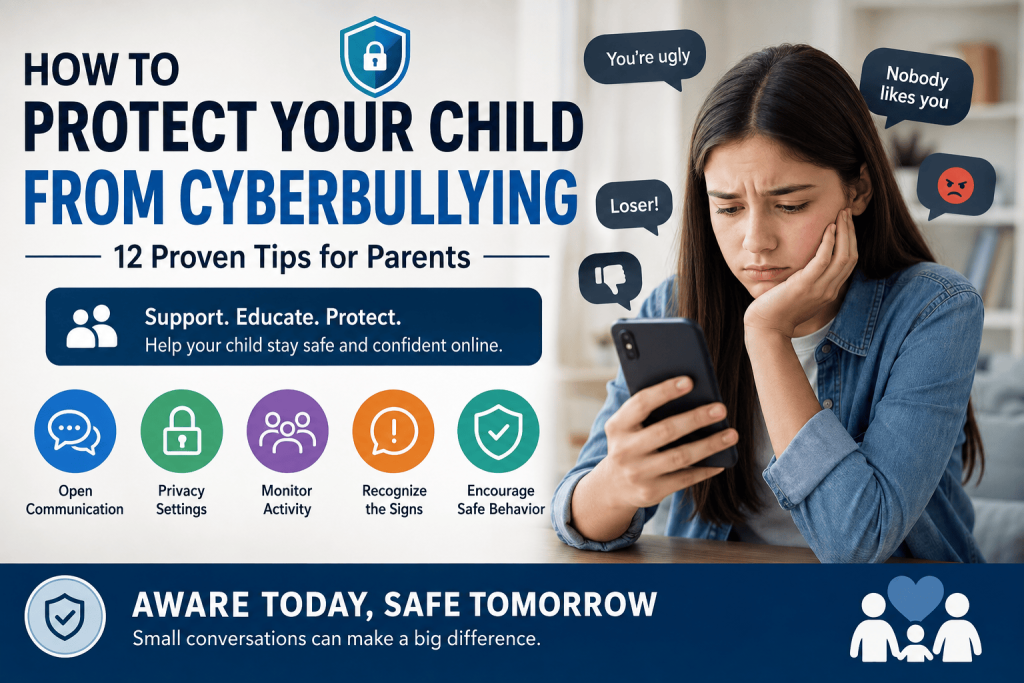
Introduction
The internet has transformed the way children learn, communicate, and build friendships. While digital technology offers many opportunities, it also exposes young people to online risks. One of the biggest concerns for families today is cyberbullying.
Protect your child from cyberbullying by teaching safe online habits, encouraging open communication, and staying involved in their digital life.
If you’re wondering how to protect your child from cyberbullying, you’re not alone. Millions of children and teenagers use social media, messaging apps, and online games every day. Unfortunately, these platforms can also become places where bullying, harassment, and harmful behavior occur.
The good news is that parents can take practical steps to reduce these risks. By staying involved, encouraging open communication, and using appropriate digital safety tools, families can create a healthier online environment.
In this guide, you’ll learn how to recognize cyberbullying, understand its effects, and discover practical ways to help keep your child safe online.
What Is Cyberbullying and How Can You Protect Your Child from Cyberbullying?
Cyberbullying is bullying that happens through digital devices such as smartphones, tablets, computers, or gaming consoles.
It may include:
- Sending hurtful messages
- Posting embarrassing photos
- Spreading rumors online
- Creating fake social media accounts
- Excluding someone from online groups
- Sharing private information without permission
Unlike traditional bullying, cyberbullying can happen at any time and may reach a much larger audience.
Why Is Cyberbullying a Serious Problem?
Children today spend more time online than ever before.
Cyberbullying can affect a child’s:
- Self-confidence
- Mental well-being
- School performance
- Friendships
- Sleep quality
Some children become withdrawn or avoid activities they once enjoyed. Early support from parents can make a significant difference.
These practical strategies will help you protect your child from cyberbullying while encouraging responsible internet use.
12 Proven Tips to Protect Your Child from Cyberbullying
1. Talk About Online Safety Early
Regular conversations about internet safety help children understand how to behave responsibly online.
Discuss topics such as:
- Respecting others
- Protecting personal information
- Recognizing inappropriate behavior
- Reporting bullying
Children are more likely to seek help when they know they won’t be judged.
2. Encourage Open Communication
Create an environment where your child feels comfortable discussing online experiences.
Ask questions like:
- How was your day online?
- Did anything make you uncomfortable?
- Have you seen someone being bullied?
Listening calmly encourages honesty.
3. Teach Privacy Settings
Help your child:
- Set social media accounts to private
- Review friend requests carefully
- Disable location sharing unless necessary
- Limit who can send messages
Privacy settings reduce exposure to strangers.
4. Learn About the Apps They Use
Understand the platforms your child uses.
Examples include:
- TikTok
- Snapchat
- Discord
- Roblox
Knowing how these apps work makes it easier to discuss online safety.
5. Watch for Warning Signs
Some signs may include:
- Sudden mood changes
- Anxiety after using devices
- Avoiding school
- Sleep problems
- Loss of interest in hobbies
- Deleting social media accounts unexpectedly
These changes don’t always mean cyberbullying, but they deserve attention.
6. Encourage Strong Passwords
Teach children to:
- Use unique passwords
- Enable two-factor authentication
- Never share passwords with friends
Secure accounts help reduce unauthorized access.
7. Limit Personal Information
Explain why children shouldn’t publicly share:
- Home address
- Phone number
- School name
- Daily routines
- Financial information
Protecting personal information reduces online risks.
8. Promote Respectful Online Behavior
Teach children to:
- Think before posting
- Avoid responding with anger
- Treat others respectfully
- Report abusive content
Positive digital behavior helps create safer online communities.
9. Use Parental Controls When Appropriate
Parental controls can help families:
- Manage screen time
- Filter inappropriate websites
- Review app usage
- Encourage healthy digital habits
These tools work best when used transparently and alongside open communication.
10. Save Evidence of Bullying
If cyberbullying occurs:
- Take screenshots
- Save messages
- Record usernames
- Keep dates and times
This information can be helpful when reporting abuse.
11. Report and Block Bullies
Most online platforms allow users to:
- Block accounts
- Report abusive behavior
- Remove unwanted followers
Encourage your child not to continue arguments online.
12. Seek Help When Needed
If bullying becomes serious:
- Contact the school.
- Report the behavior to the platform.
- Speak with a trusted adult or counselor if your child is struggling emotionally.
Seeking support early can help prevent problems from becoming more severe.
Signs You Need to Protect Your Child from Cyberbullying
Parents should pay attention if a child:
- Suddenly avoids using devices
- Appears anxious after receiving messages
- Becomes unusually quiet
- Experiences declining grades
- Has difficulty sleeping
- Withdraws from family or friends
Open conversations are often the best first step.
How Schools and Parents Can Work Together
Schools and families both play an important role.
Working together can help:
- Identify problems earlier
- Support affected students
- Promote respectful online behavior
- Encourage responsible technology use
Strong communication between parents and educators benefits children.
Parents can learn more about healthy digital habits from the American Academy of Pediatrics.
How to Protect Your Child from Cyberbullying: FAQs
How can I protect my child from cyberbullying?
Talk regularly about online safety, encourage open communication, teach privacy settings, monitor age-appropriate technology use, and help your child report abusive behavior.
What should I do if my child is being cyberbullied?
Stay calm, save evidence, block abusive accounts, report the behavior to the platform, and contact the school if appropriate. If your child is showing signs of significant emotional distress, consider seeking support from a qualified mental health professional.
Can parental control apps stop cyberbullying?
No app can completely stop cyberbullying. However, parental controls can support healthy technology use and help parents identify potential concerns early.
At what age should parents discuss online safety?
Parents should begin age-appropriate conversations as soon as children start using internet-connected devices and continue those discussions as they grow older.
Every parent can take simple steps to protect their child from cyberbullying without invading their privacy.
Conclusion
Learning how to protect your child from cyberbullying is an important part of modern parenting. While no solution can eliminate every online risk, families can reduce the chances of cyberbullying by encouraging open communication, teaching responsible internet use, setting clear expectations, and using parental controls when appropriate.
The goal isn’t to monitor every click—it’s to help children build the knowledge and confidence they need to navigate the digital world safely. With guidance, trust, and ongoing conversations, parents can support their children in developing healthy online habits that will benefit them for years to come.