
Introduction
Smartphones have become an essential part of children’s daily lives. They use them for learning, communicating with friends, completing homework, watching videos, and playing games. While mobile technology provides many benefits, excessive phone use can negatively affect sleep, school performance, mental well-being, and family relationships.
Recognizing child phone addiction signs early allows parents to encourage healthier digital habits before smartphone use becomes a serious problem. Child phone addiction signs are not always obvious, but changes in behavior, emotions, and daily routines often provide important clues. Understanding these child phone addiction signs helps parents create a balanced approach to technology while supporting their child’s healthy development.
What Are Child Phone Addiction Signs?
Child phone addiction signs refer to behaviors that suggest a child is becoming overly dependent on their smartphone. Every child enjoys using technology, but excessive use may begin interfering with school, sleep, exercise, family time, and emotional well-being.
Watching for child phone addiction signs doesn’t mean removing smartphones completely. Instead, it helps parents identify unhealthy habits and guide children toward balanced technology use.
Why Parents Should Recognize Child Phone Addiction Signs
Learning to recognize child phone addiction signs helps parents:
- Encourage healthy screen habits
- Improve family communication
- Reduce excessive screen time
- Promote better sleep
- Support academic success
- Build responsible digital habits
- Improve online safety
- Strengthen family relationships
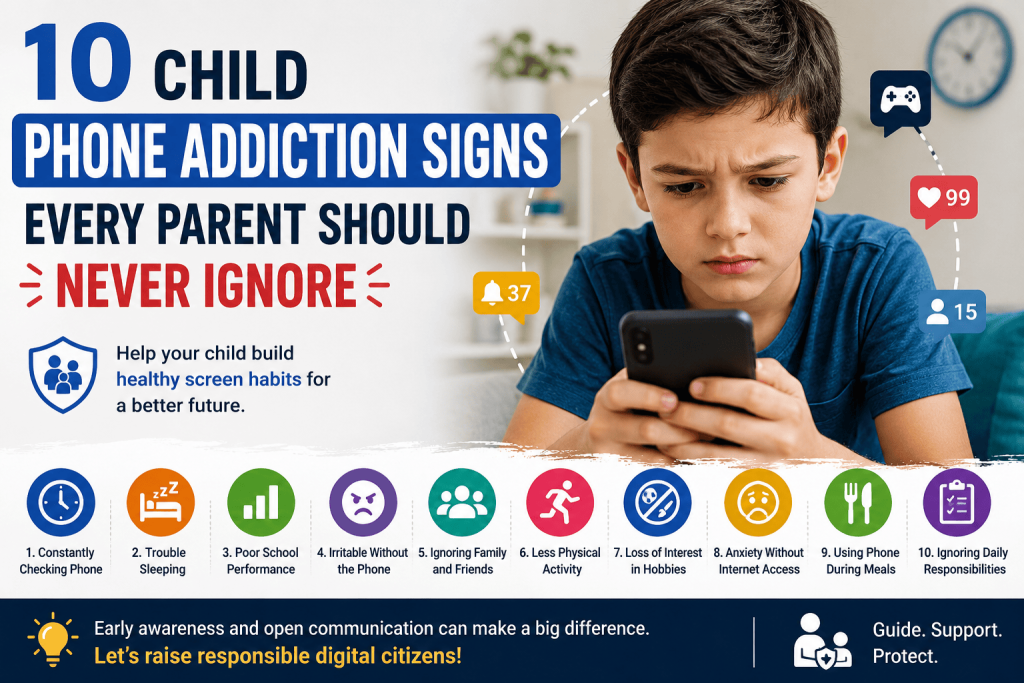
10 Child Phone Addiction Signs Every Parent Should Know
1. Constantly Checking the Phone
One of the most common child phone addiction signs is checking the phone every few minutes, even without receiving notifications.
Children may feel anxious if they cannot immediately respond to messages or social media updates.
2. Difficulty Sleeping
Many child phone addiction signs appear at bedtime.
Using smartphones late at night may lead to:
- Poor sleep quality
- Difficulty falling asleep
- Feeling tired during school
- Trouble concentrating
Creating a phone-free bedtime routine often improves sleep.
3. Poor School Performance
Another important child phone addiction sign is declining academic performance.
You may notice:
- Missing homework
- Lower grades
- Reduced concentration
- Difficulty completing assignments
Balancing study time and screen time helps children stay focused.
4. Irritability Without the Phone
Children may become frustrated or upset when asked to stop using their phones.
This is one of the most noticeable child phone addiction signs, especially when screen time limits are introduced.
5. Ignoring Family Activities
If your child prefers their phone over family meals, conversations, or outings, this may indicate unhealthy smartphone habits.
Families benefit from scheduling regular phone-free activities together.
6. Loss of Interest in Hobbies
Another common child phone addiction sign is losing interest in activities they once enjoyed.
These activities may include:
- Sports
- Reading
- Drawing
- Music
- Outdoor games
Healthy technology use should complement—not replace—other interests.
7. Anxiety Without Internet Access
Some children become stressed when Wi-Fi is unavailable or their battery is low.
This behavior may be one of the stronger child phone addiction signs, especially if it frequently affects their mood.
8. Using the Phone During Meals
Family meals provide valuable opportunities to communicate.
If your child cannot eat without looking at their phone, it may be time to establish phone-free meal routines.
9. Avoiding Physical Activity
Excessive phone use often reduces time spent exercising or playing outdoors.
Encouraging regular physical activity supports both physical and emotional well-being.
10. Ignoring Daily Responsibilities
The final child phone addiction sign is neglecting important responsibilities.
Examples include:
- Forgetting homework
- Avoiding chores
- Missing appointments
- Delaying bedtime
- Ignoring family rules
Setting consistent expectations helps children build healthier habits.
How Parents Can Reduce Phone Addiction
If you notice several child phone addiction signs, consider these practical strategies:
- Set daily screen time limits.
- Create phone-free family time.
- Keep phones out of bedrooms overnight.
- Encourage outdoor activities.
- Support hobbies away from screens.
- Talk openly about healthy technology use.
- Lead by example with your own phone habits.
- Use parental controls when appropriate.
Consistency is more effective than strict punishment.
Benefits of Healthy Screen Time Habits
Reducing excessive phone use can help children:
- Sleep better
- Improve school performance
- Build stronger family relationships
- Become more physically active
- Reduce stress
- Improve focus
- Develop healthier digital habits
UNICEF Online Safety: https://www.unicef.org/end-violence/how-to-stop-cyberbullying
Frequently Asked Questions
What are child phone addiction signs?
Child phone addiction signs include constantly checking the phone, difficulty sleeping, declining school performance, irritability without the phone, avoiding family activities, and neglecting responsibilities.
How much phone use is too much?
There is no universal limit. Parents should focus on whether smartphone use affects sleep, learning, exercise, relationships, or emotional well-being.
Can parental controls help?
Parental control tools can support healthy screen habits by helping families manage screen time, encourage balanced device use, and promote online safety. They work best when combined with open communication.
Should parents completely ban smartphones?
In most cases, no. Teaching responsible technology use and setting clear family expectations is generally more effective than banning smartphones entirely.
Conclusion
Recognizing child phone addiction signs allows parents to take positive action before excessive smartphone use affects their child’s daily life. Smartphones are valuable learning and communication tools, but children also need time for sleep, physical activity, family interaction, and offline hobbies.
By encouraging healthy routines, setting realistic boundaries, and maintaining open conversations about technology, parents can help children develop lifelong digital habits that support both their well-being and future success.